Badgify at MIDEM Hack Day 2012

3 02 2012

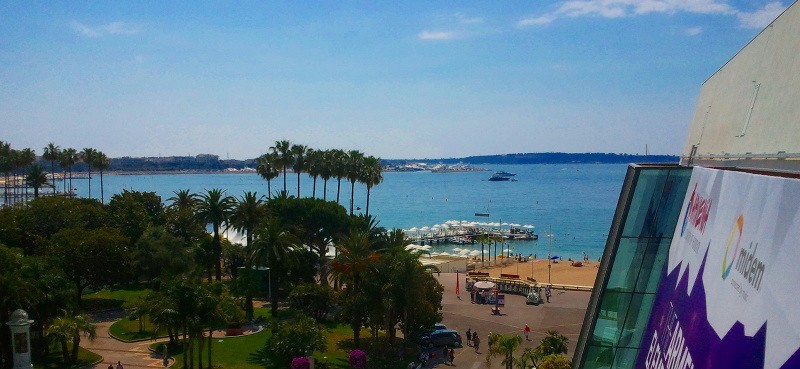
This past weekend I participated in a Music Hack Day-esque event. It’s not quite a regular hack day as it is not an open invitation – you have to apply and have attended a hack day before. It’s because it’s a higher pressure event and you’re expected to output a quality hack with a good demo by the end of it for the music business conference attendees. The hack day is also much smaller – 30 people instead of 100+. The result was that it was easier to meet the other hackers and the demonstrations went just amazingly well. Everyone was well spoken and gave a clean demo.

Rebecca Stewart
Photo by Thomas Bonte

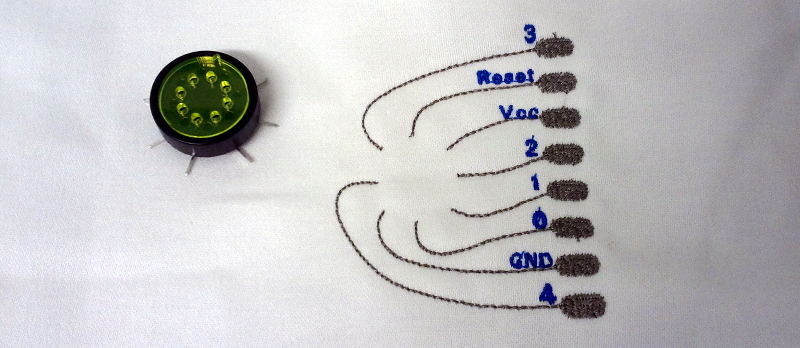
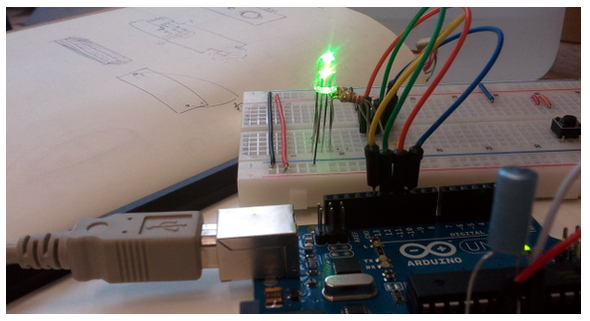
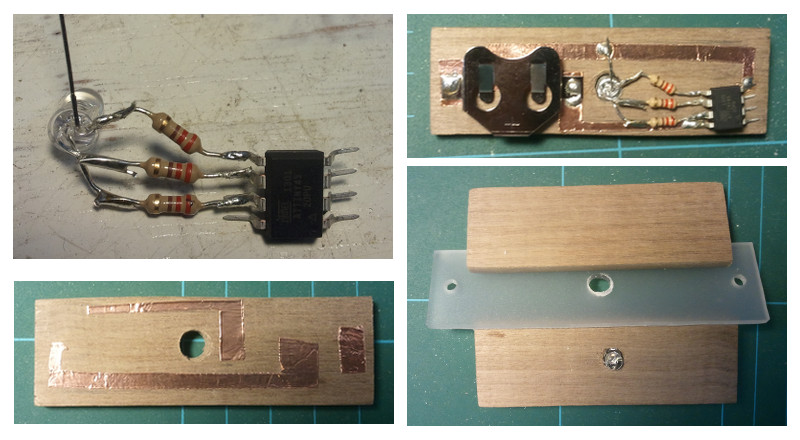
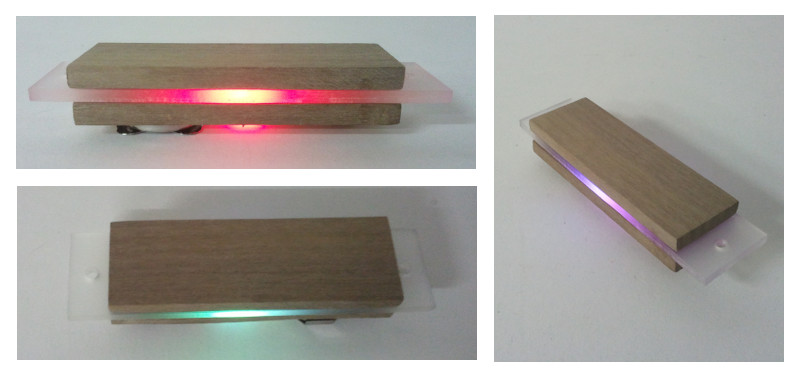
I worked with Suzie Blackman to produce Badgify. It was an Arduino and Android hack inspired by an Internet of Things approach. There are many ways to broadcast what you are listening to: Spotify, Last.fm, Facebook, This Is My Jam, and so on. But all of those services require online connectivity for others to learn what music you are listening to. Our hack lets you share what you are listening to with others in the same physical space as you. Using Bluetooth, your Android phone can communicate with a LCD screen “badge” that you can pin on your coat or bag. It displays the artist you most recently listened to (and scrobbled to Last.fm).

Below is the video of our presentation and a video of the badge and app in action. Our presentation is about 37 minutes in.

The hacks have also picked up a little bit of press.

I’m really glad I attended. Last year’s event was the first MIDEM Hack Day and it was invite-only; there wasn’t an application process. I was vocal in my disappointment in conducting an event this way and was happy that an open application process was adopted for this year. I wholeheartedly encourage you to apply next year.


Soft Circuit Singing Pig with Wigs – Part 4 Construction

12 01 2012

Pig in black wig

The patterns for the pig and all the wigs are from Knitting Mochi Mochi by Anna Hrachovec. The knitting of the soft circuit pig was largely unaltered from the original pattern. The main adaptation was that I needed to access the inside of the pig. The original pattern knits the pig from tail to snout and stuffs the pig before casting off and closing up the body. I added an opening and a flap to the underside of the pig by working the body flat instead of in the round for the section between the increases and decreases. I cast on 5 stitches at the end of the row and cast them off again before joining the body in the round and continuing on to the head. This gave me a flap so sew snaps to create a clean closure.

Animation of the pig being knit

Read the rest of this entry »


Soft Circuit Singing Pig with Wigs – Part 3 Code

7 01 2012

Pig in mohawk wig

To summarize the previous posts, I made a singing stuffed animal that happens to be a pig. It sings a different song according to the wig it is wearing which functions as an electrical switch between VCC and ground. This change in voltage is detected by an Arduino Uno. This post will go over the Arduino code that I wrote.

The full source is up in github. Please take it and do as you would like with it. Let me know what you get up to with it.

Read the rest of this entry »


Soft Circuit Singing Pig with Wigs – Part 2 Circuit

4 01 2012

Pig in beehive wig

The interaction design for the singing pig was to have a different song start playing when a different wig is placed on the pig. The pig needed to stand by itself without being connected to anything else and the wigs needed to look like nothing out of the ordinary (ordinary wigs for pigs, that is). I wanted the way the wigs attach to the pig to be no different than any other stuffed toy, but they also need to pass current and electrically trigger events on an Arduino. Metal snaps were my go-to item as they very nicely interface between “hard” components (things you normally associate with a circuit) and “soft” components (conductive thread).

Read the rest of this entry »


Soft Circuit Singing Pig with Wigs – Part 1 Overview

2 01 2012

Animated gif with pig in different wigs

I come from a family serious crafters. I’m the only child that didn’t go to art school (though I guess music school isn’t that left field). My sister is currently studying at Savannah College of Art and Design basically learning how to design awesomeness. When she visited me in London this past summer, we came to a rather strange agreement: she would create a mounted deer head art piece for me and in return I would make her a stuffed animal pig with different wigs that sings (she also requested ninja-capabilities, but I had to draw the line somewhere). We agreed this in July and then didn’t really speak of it again, but we both understood that we needed to produce our gifts by Christmas.

This started when she was thumbing through my copy of Knitting Mochi Mochi by Anna Hrachovec and came to the pig with wigs (you can see one of them on the book cover in the upper right corner). We had been playing around with my Sing-a-ma-jigs earlier. I think the Mochi Mochi Land patterns are yearning to be mashed up with some electronics, and when my sister concluded independently of me that the pig should sing (a project I had wanted to do but didn’t have time to devote to at the ITP Camp last summer), I believed I had no other choice than to make it so.

The result is a pig with glowing eyes and the on/off switch as the tail. When the pig is on and there aren’t any wigs on its head, nothing happens beyond the pulsating eyes. When a wig is snapped onto it, the pig sings the song associated with that wig: a black wig sings Bad Romance by Lady Gaga; a beehive sings Tik Tok by Ke$ha; and a mohawk sings Superbass by Nicky Minaj.

And this is what my sister made me (sorry, not a brilliant photo):

Paper mache deer head

As it was a rather large project, I’m breaking up the documentation into multiple blog posts (circuit design, code, and construction).


5 Years

31 08 2011

My brain hurt like a warehouse, it had no room to spare
I had to cram so many things to store everything in there

Five years ago, well a couple weeks shy of five years, I began my PhD research under the supervision of Mark Sandler at the Centre for Digital Music (C4DM) in what was then the Department of Electronic Engineering at Queen Mary, University of London. We were a group of 30 or so researchers spread across two offices with a shiny new Listening Room to use in our research.

C4DM in November 2009

C4DM in November 2009

Now we’re something closer to 60 researchers associated with the group spread across four offices (once the construction dust is settled on the new office space). We are also now a part of the School of Electronic Engineering and Computer Science and within qMedia. Along with the Listening Room is a new Control Room and Performance Lab to be used with the Media Arts and Technology doctoral training centre.

Rocking out in the Listening Room

Yves and Matthias in the Listening Room in April 2007. Not many people know this, but Yves is a particularly talented trumpeter.

This September will commemorate 10 years of C4DM as a research group, and it will be the first September since 2005 that I will not be a researcher within it. I submitted my PhD thesis in July 2010 and have been a postdoctoral research assistant since then. It’s been an amazing time, but universities need turnover – they thrive on a continuous flow of new people with new talents and passions – so it is time to move on.

Presentations on MIR to the public at the Dana Centre.

Presentations on music information retrieval to the public at the Dana Centre as part of the OMRAS2 project in 2008. Photo taken by Elaine Chew.

I’m not going very far (in fact I’ll be back tomorrow for a meeting), but it still feels like a significant change. I’m not ready to publicly announce my next steps, but I’m happy to talk with you in person about what exciting things I will be up to past August. I’ll be talking about my new venture at the C4DM 10th Anniversary Event: Past, Present and Future, so come along to that! Even if you’re not bothered about what I’ll be up to, come along anyway! There’s also an evening event.

C4DM stand at the Big Bang in 2010

The C4DM exhibition stand at the Big Bang Science Festival in 2010.

Goodbye, C4DM!


Soft Circuit Voodoo Doll!

30 06 2011

At an ITP Camp session lead by Catarina Mota of openMaterials, I built a voodoo doll of her design. It’s so simple, yet such a great effect.

Soft Circuit Voodoo Doll from Becky Stewart on Vimeo.

Here are her slides from the session:

Full tutorial after the jump.
Read the rest of this entry »


Open Source Hardware Panel

28 06 2011

Open Hardware logo

A couple Fridays ago was an informal panel discussion of things related to the Open Source Hardware movement and included some big names from the community.

I think it’s important to understand the tone of the panel: there was a declared drinking game that you had to drink whenever anyone said “community”. It was a light-hearted event that generated some excellent discussion. Early on the in evening Bre stated:

Open source hardware is not about the hardware, it’s about the infrastructure to participate.

I’ve had very little (arguably no) direct involvement in OSHW (open source hardware) and this declaration just seemed incredibly profound to me and really underlines the difference in communities between OSHW and FOSS (free and open source software).

There was a fair bit of discussion comparing the two communities, and of course given the crowd, there was a strong bias towards how the OSHW community operates. After learning more of the philosophy of OSHW, I’m inclined to prefer their approach over FOSS’s.

It was said that a lot of the differences come down to atoms vs. bits. It allows for business models to be more obvious because there’s a physical product with a more explicit cost while software isn’t tied to the physical. This also allows software to be a religion in ways that hardware cannot.

Another difference is that the next TODO of FOSS is documentation while the next TODO of OSHW is the consumer product. There are probably those that disagree with this statement, but I found it to be valid and to point out what I feel is a hugely discriminatory factor in FOSS. Overall, FOSS is poorly documented. It’s just not a community priority. Of course there are exceptions, but there is a large contingent of FOSS that seems to pride itself on steep learning curves and insider knowledge. This makes it very difficult for “outsiders” to join. In particular, it makes it more difficult for individuals who don’t exhibit the stereotypical white male nerd traits to participate. OSHW seems much more conscious of inclusion and group contribution.

My limited experience with the OSHW community has been through publications like Make Magazine, Maker Faire and the London Hackspace. All of these are male dominated spaces, so I didn’t expect the gender parity of the OSHW panel. FOSS panels would kill for this kind of gender representation. I find hackspaces (or at least the one in London) to be incredibly similar to FOSS demographics. I’ve even seen it drive away men from Big-C Creative industries because of the huge embrace of nerd culture.

My assumptions of the gender dynamics of OSHW fall apart when I actually think about them. I can much more easily name female contributors to the hardware world than software. Off the top of my head: Leah Buechley, Limore Fried, Becky Stern and now can add the panelists listed above.

I think once you’re inside the engineering club to some degree, in the process of assimilating it can be easy to forget how to be inclusive to those without engineering backgrounds. While at the ITP Camp, and especially by attending the sessions taught by Tom Igoe, I’ve certainly come to appreciate the tools that have been developed for those without computer science or electrical engineering backgrounds, in particular Processing and Arduino. I previously was frustrated with the platforms as I thought it dumbed-down the content excessively and didn’t ensure that proper engineering concepts were taught. However, I now appreciate that they get people writing code and working with microcontrollers without requiring entry into the exclusive clubhouse that is engineering. Learning the technical bits can come later. Finding an initial passion for creating and engineering needs to fostered first.


Sneak Peek at Android + Arduino + Processing

16 06 2011

I’ve fallen very behind in posting about the sessions I’ve been attending at ITP Camp, but the one I attended last night has so much exciting potential, it’s skipping the queue of posts of previous sessions. The session description and info can be found here.

A couple months ago Google announced their Open Accessory Developement Kit. While everyone was really excited that they decided to use Arduino in the platform, there were some concerns about some of the engineering decisions that were made. The good folks involved with the development of Processing care about low barriers to entry for programming and feel that the workflow of Eclipse with the ADK could be a bit more user-friendly.

Processing for Android is already released and it is indeed very easy to get something running on an Android device. The exciting new development is in the photo below. This is an Arduino Mega ADK for Android. Only a couple dozen currently exist and as Tom Igoe is helping with the development, he has a box of them at ITP. They will become less exclusive very soon as they go on sale 4 July.

Arduino Mega ADK boark

Once everything is released, developers/artists/designers/people can used the Arduino environment and Processing to created objects that interact with the physical world and are run by Android devices including all the connectivity that they offer. Super amazing stuff.

Requirements

  • Processing 1.5 or greater
  • Arduino Environment 1.0-beta1 or greater
  • Android ADK 2.3.3 (need API 7 to set up Processing and API 10 for Arduino)
  • Not yet released Arduino ADKLib for Processing
  • Android device
  • Arduino Mega ADK for Android
    • On a side note, starting in Arduino 1.0, Arduino sketches will no longer have .pde as the extension but will begin sporting the .ino extension. This means no more confusion between Processing and Arduino sketches. It is important to know that all .pde sketches from previous Arduino environments (including the examples) will have their extensions automatically changed to .ino. So older versions of Arduino will not recognize the new extension and it will appear that your examples and sketches have vanished. Changing the extension back to .pde will solve that, but reports are that Arduino 1.0 has been running sketches from older versions without any problems.


Entrepreneurship at ITP

8 06 2011

The first two sessions that I attended at the ITP Camp were focused on entrepreneurship within creative industries, though from two very different angles. The first was lead by Lawrence Lenihan, a venture capitalist and Adjunct Professor at NYU, and the second by Tarikh Korula, an ITP alumnus and founder of Uncommon Projects, and Doug Barnes, a lawyer and friend of Tarikh’s. The two sessions were different in several ways, most obviously because the first was focused on product-drived industry and the second was focused on service-driven consultancy.

Read, FIRE!, Aim – product-driven business development. The slides were a subset of teaches at NYU. The slides he used for the session can be found here.

Here’s a summary of some of his main points:

  • Don’t write business plans, write business presentations. It’s not worth the time and effort to write a full 40+ page document that will quickly be out of date. It’s better to put energy into communicating what your business does.
  • Form your business around easing a pain. It’s better if it’s a pain that you are passionate about easing. Use tools like Google to see if people are looking for what you want to sell.
  • Figure out how much it costs to acquire a customer.
  • Know the difference between entrepreneurial opportunities and venture capital opportunities. Just because your business is not attractive to a VC doesn’t mean it isn’t a worthwhile pursuit.

Entrepreneurship for Creatives – consultancy businesses. It focused on concrete details, particularly in contract negotiation that design consultants should be familiar with along with other general advice on striking out on your own. It was an excellent session that was well attended; here’s just a few highlights from the evening:

  • Scale is a huge challenge for consultancies. The time to money ratio makes it difficult to grow as you can only work so many hours.
  • Someone in your business needs to be able to handle sales. The whole thing fails if no one is a salesperson.
  • You don’t have to do business the stereotypical white guy way.
  • Pick two: cheap, fast, good. The clearer you are at communicating this with clients, the happier everyone will be with the end result.
  • Contracts do not need to be written down and certainly don’t need to be full of opaque legal jibberish. But writing things down as a matter of record (for instance in e-mail exchanges) is good practice.
  • Educate yourself about IP. Your lawyer can’t tell you what your business model and IP model should be. Only you can make that decision.
  • When allocating IP, pay attention to what you get to retain. What do you really need to own? What does the client really need to own? Be sure that you’re only agreeing to sell things that you own and can afford to sell.
  • Decide what IP you need to own in order for your business to exist and grow, and then let everything else that is unimportant go.
  • When you’re about to blow an estimate on a project, tell the client. Being up front and communicating keeps everything civil. As a service provider, it is your responsibility to be clear with the client.
  • Questions about incorporating and forming legal structures become important when there are more than one of you (e.g. parters, employees).
  • In the US, generally tax and accountancy issues increase as you move from sole proprietor to corporation.
  • Can set up contracts with mixed rates: fixed rate for certain assumptions; hourly rate when those assumptions fail.

Other sources of information that were recommended were Fred Wilson’s blog avc.com and the presentation I’ve embedded below.

2011/03 Mike Monteiro | F*ck You. Pay Me. from SanFrancisco/CreativeMornings on Vimeo.

Both session leaders recommended the book Getting Real by 37signals.

These were the first entrepreneurial events/talks that I’ve attended in the US. I didn’t really have much interest in the area until I started my PhD, so I’ve attended business development events in the UK. The thing that really stood out for me during these sessions was just how American-centric they were. In the session with the VC I asked how some of the topics he was talking about translated to Europe, particularly the UK. He responded that he didn’t know and wasn’t interested in knowing. He was only interested in US markets and companies. It was too hard to fire someone in France. While the American-centrism was less blatant in the consultancy session, there was a curious lack of acknowledgement of anything other than the US system. (But oh did the talks of how much money you need as a buffer make me so appreciative of the NHS. Estimates of $400+ a month for healthcare.)

Both talks were focused on New York, as one would expect given our geographic location, but I found it curious that they lacked any discussion of any other place in the world or even just the US. The exception was a side note in the VC talk that countries such as Brazil and China will soon blow up as the next big thing.

In both sessions there was a lot of discussion of the current bubble, though the difference in tenses used was quite interesting. The VC viewpoint was that the bubble is going to crash in the next 18 months and is already approximating the end of the dotcom bubble (Ashton Kutcher was noted as one of the significant signs). In contrast, the consultancy talk believed the bubble is still on the up, though of course acknowledged that it will one day end.